Recommended Resources

Books For Trauma
"The Body Keeps the Score" By Bessel Van Der Kolk
The Body Keeps the Score by Dr. Bessel Van Der Kolk explains how trauma reshapes both the brain and body, leaving lasting effects long after the event has passed. Using decades of clinical research, Van Der Kolk shows that trauma isn’t just psychological. It’s also physiological.
-
Trauma and the brain: Chronic trauma affects brain structures like the amygdala and prefrontal cortex, making it hard to regulate emotions or feel safe (NCBI, 2011).
-
Mind–body connection: Many trauma survivors experience physical symptoms such as pain, fatigue, or disconnection from their bodies (Simply Psychology).
-
Somatic therapy works: Van der Kolk highlights the success of body-based trauma therapies like yoga, EMDR, neurofeedback, and mindfulness practices (TIME Magazine).
-
Connection heals: Safe relationships and community support are essential in restoring a sense of trust and belonging.
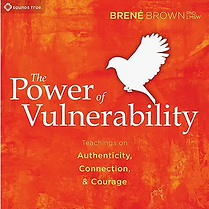
"The Power of Vulnerability" By Brene Brown
In her best-selling lecture series, Dr. Brené Brown, a research professor at the University of Houston, reveals that vulnerability is the source of courage, authenticity, and deep human connection.
-
Scarcity vs. Wholeheartedness
She explains “scarcity culture”, the belief we’re never enough, and outlines how embracing vulnerability and self-compassion leads to wholehearted living: gratitude, resilience, and genuine joy.
-
Shame, Vulnerability & Worthiness
Shame is the fear of disconnection. Authentic living requires allowing ourselves to be seen, embracing uncertainty, and believing we are worthy of love and belonging.
-
Practicing Vulnerability
Brown offers ten actionable guideposts, self-compassion, gratitude, courage, and trust, that help individuals step into vulnerability and experience deeper empathy, creativity, and relationships.
-
Healing Through Authenticity
Vulnerability isn’t weakness. It’s the foundation for inner transformation, stronger bonds, and resilience in the face of uncertainty.
-
Science Meets Heart
Brown’s work blends rigorous qualitative research with storytelling, making it relatable and impactful in mental health, coaching, and leadership spaces.
Books for Relationships
"Attached" By Levine
"Attached" by Amir Levine, MD, and therapist Rachel Heller dives into how attachment styles: secure, anxious, and avoidant. Shape our romantic relationships and emotional well-being.
-
Three Attachment Styles:
-
Secure: Comfortable with intimacy and independence.
-
Anxious: Craves closeness and reassurance; fears abandonment.
-
Avoidant: Values autonomy; struggles with intimacy and emotional expression.
-
-
The Dependency Paradox:
Emotional dependence on a responsive partner fosters personal growth and independence. A strong bond provides safety and boosts resilience.
-
Anxious–Avoidant Trap:
When an anxious and avoidant partner pair, opposing needs trigger a cycle of pursuit and distance that undermines stability.
-
Cultivating Secure Attachment:
Strategies include clear communication of needs, partnering with securely attached individuals, addressing attachment hurts, and practicing trust-building exercises.
"Boundaries" By Henry Cloud
In Boundaries, Dr. Henry Cloud and John Townsend explain how learning to set clear emotional, physical, and spiritual limits is essential to maintaining healthy relationships and a fulfilling life. The authors emphasize that without boundaries, people often feel resentment, burnout, or emotional overwhelm, especially when they say “yes” out of guilt or fear instead of choice.
-
Boundaries Define Responsibility
Just like fences in a yard, personal boundaries define where your responsibility ends and another’s begins. This helps protect your time, energy, and well-being (Crosswalk.com).
-
Saying No Without Guilt
Learning to say “no” in a kind but firm way is central. Boundaries empower individuals to prioritize their values without being controlled by others’ expectations (Focus on the Family).
-
Biblical and Psychological Foundations
The book draws from Christian teachings, asserting that setting boundaries honors God and others, while also aligning with sound psychological principles (9Marks).
-
Types of Boundaries
Boundaries can be emotional (not taking responsibility for others’ feelings), physical (protecting your body and space), relational (managing toxic dynamics), and spiritual (honoring your values and beliefs).
-
The Ten Laws of Boundaries
These include the Law of Responsibility, the Law of Respect, and the Law of Motivation. Each law teaches a key principle in developing stronger internal and external limits (Into Your Hands LLC).
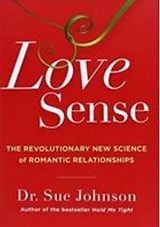
"Love Sense" By Sue Johnson
In Love Sense, Dr. Sue Johnson, founder of Emotionally Focused Therapy (EFT), explores how romantic love is rooted in attachment theory, showing that our need for emotional bonding is both innate and essential for survival.
-
Love as an Attachment Bond
Romantic love is like a secure attachment—you instinctively seek closeness and emotional safety, not just sexual connection.
-
The Dance of Connection & Disconnection
Relationships naturally go through disconnection and reconnection cycles. Healing comes from noticing these patterns and intentionally repairing emotional engagement.
-
Neurobiology of Love
Love isn’t just emotional—it’s also biological. Johnson explains how hormones and brain structures reinforce secure bonds and help regulate emotions within relationships.
-
Emotion-Focused Tools
The book offers practical exercises—such as moment-to-moment emotional labelling and expressing attachment needs—that help couples rebuild trust and intimacy.
"The State of Affairs" by Esther Perel
In The State of Affairs, couples therapist Dr. Esther Perel explores the complexities of infidelity, its emotional, psychological, and cultural dimensions, offering a nuanced framework for understanding and healing after betrayal.
-
Infidelity as a Cultural Mirror
Perel argues that affairs are not just breaches of trust—they reflect evolving needs in modern relationships, including desire, autonomy, and self-discovery. She encourages moving past moral judgment to uncover deeper relational truths.
-
Affairs and Emotional Trauma
Discovering an affair is often traumatic, akin to unexpected grief. Perel describes how both partners experience emotional shock and acknowledges that healing usually begins with acknowledging the pain and candid communication.
-
Potential for Regeneration
Rather than ending relationships, Perel suggests infidelity can offer an opportunity to reevaluate and even enrich partnerships. If there’s a willingness to confront shame, rebuild trust, and rebalance desire and intimacy.
-
Rethinking Monogamy
The book questions whether strict monogamy aligns with human nature. Perel brings up discussions around consensual non-monogamy and acknowledges that some couples use infidelity crises to reinvigorate intimacy.
Books for ADHD
"Scattered Minds" By Gabor Mate
Dr. Gabor Maté, an experienced physician and ADHD researcher, challenges the conventional view that ADHD is purely genetic. Instead, in Scattered Minds, he presents ADHD as a developmental reaction to early childhood stress and emotional deprivation, suggesting it’s both understandable and treatable.
-
ADHD as Adaptive Response
Maté portrays ADHD not as a lifelong illness, but as a reversible impairment rooted in developmental stress and societal dysfunction, not just genes.
-
Early Life & Brain Development
Stress in infancy, like a lack of emotional attunement, can inhibit prefrontal cortex maturation, leading to focus, impulse, and self-regulation difficulties.
-
Holistic Healing Over Medication Alone
He suggests that improving the environment, relationships, and self-care can dramatically reduce ADHD symptoms across the lifespan.
-
Real-world Validation
Readers and clinicians praise the book for its empathy, clarity, and actionable guidance, though some note that the balance between genetics and environment remains debated.
Books about Fears
"Feel the Fear and Do It Anyway" by Susan Jeffers
In Feel the Fear and Do It Anyway, psychologist Susan Jeffers (1938–2012) teaches that fear is a lifelong companion, but our power lies in choosing action over avoidance.
-
Fear Is Normal. But You Can Handle It
Jeffers argues that beneath every fear lies the belief “I can’t cope.” Her mantra, “Whatever happens, I’ll handle it,” empowers readers to challenge that belief and take action.
-
Shifting from Victim to Creator
Through cognitive reframing, readers move from feeling powerless to recognizing their ability to make no-lose decisions and live with greater personal responsibility.
-
Ten-Step Tool to Overcome Fear
Jeffers provides a toolkit, including affirmations, daily courage exercises, and reframing, helping cultivate self-efficacy and resilience.
-
Reframing Fear as Anxiety or Nervousness
Changing language and mindset helps diminish perceived threat and opens the path to confident action.
"Dare: The New Way to End Anxiety and Stop Panic Attacks" by Barry McDonagh
Barry McDonagh, an anxiety coach and author, presents DARE, a bold, four-step strategy for ending anxiety and preventing panic attacks at the root.
-
Defuse (“D”)
Replace “what if?” thoughts with empowered responses like “So what?” or “Oh well.” This weakens anxiety’s momentum rather than fueling it.
-
Allow (“A”)
Stop fighting fear. Instead, allow anxious feelings to exist without resistance. Accepting discomfort diminishes its power.
-
Run Toward (“R”)
Lean into anxiety like approaching a wave, not away from it. Reframe fear as “excitement” to rewire your body’s stress response.
-
Engage (“E”)
Redirect energy into purpose-driven action, tasks, connection, or creativity, so anxious energy doesn’t spiral.